

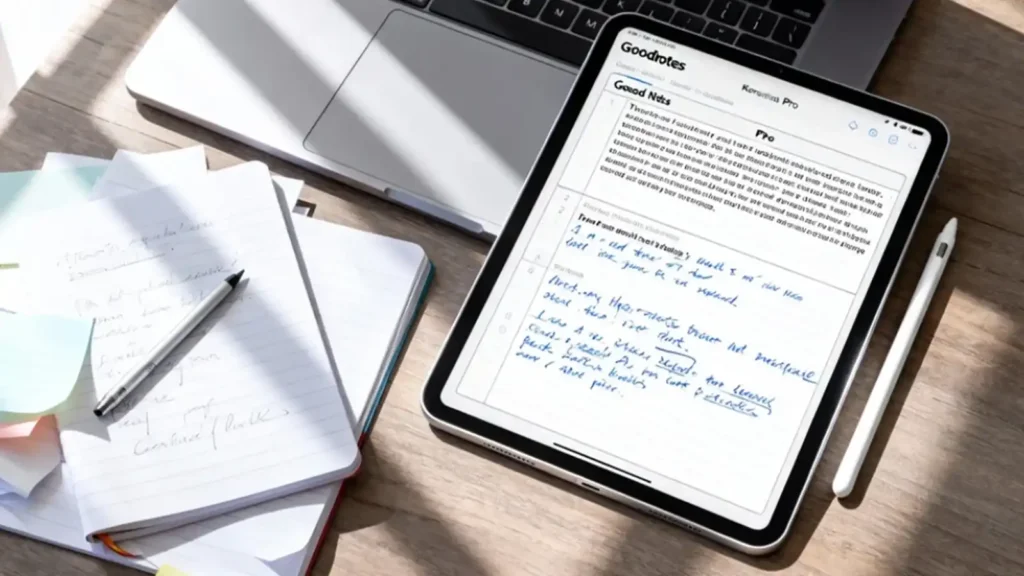
Looking back at my medical notes from three years ago, I can still quickly locate key information. It’s not about having a great memory—it’s about using the right system.
During medical school, I nearly had a breakdown after failing to find pathology notes I’d taken just a week earlier. That’s when a professor observed: “The problem isn’t your memory—it’s that your note-taking system can’t keep up with your thinking.” He drew two lines across my notebook page, and that’s how I discovered the Cornell Note-Taking System.
This method, developed at Cornell University in the 1950s, seems almost too simple to be effective. But after one month of consistent use, I found it had completely transformed how I process information.
What Makes the Cornell Notes Template So Powerful?
Imagine your note page divided into three purposeful sections:
Right Main Section: Record information as usual, but in your own condensed words
Left Cue Column: After recording, distill keywords and conceptual questions here
Bottom Summary Area: Within 24 hours, capture the page’s essence in 2-3 sentences
This structure forces you to engage with information at three different points: while recording, while organizing, and while reviewing. Research shows this multi-stage processing can improve information retention by at least 300%.
Four Proven Benefits I’ve Personally Verified
- Break the “Record and Forget” Cycle
With traditional linear notes, I often fell into “writing with a sleeping brain” mode. The Cornell system’s cue column acts like a supervisor, constantly prompting: “What’s the core concept here? How would I explain this to someone else?”
When documenting heart blood circulation, for instance, I’d write in the cue column: “Why is the left ventricular wall the thickest?” That very question later appeared on the exam.
- Reduce Review Time by 70%
I used to spend dozens of hours relearning entire semesters before finals. Now, I simply cover the main notes section and use the cue column questions to test myself—completing effective review in less than one-third the time.
Last week, my niece used this method to prepare for her history exam. She told me: “So reviewing isn’t about rereading—it’s about checking what you actually remember.”
- Achieve Unusual Mental Clarity
The small summary area at the bottom is the most overlooked treasure. Initially, I thought it was redundant until I realized: if I can’t summarize a page in 2-3 sentences, I haven’t truly understood the material.
This “forced distillation” skill later proved invaluable during clinical diagnostics. Faced with complex cases, I can quickly identify crucial information—a direct benefit from my daily Cornell notes practice.
- Adapt Seamlessly to Any Situation
Whether quickly recording patient symptoms in the emergency room or capturing key data at academic conferences, this system demonstrates remarkable flexibility. I’ve even developed a mini-version for hospital rounds that fits on a single index card.
Your Starting Point: Free Cornell Notes Template
After all this, you might be thinking: “Drawing those lines seems tedious.” Don’t worry—I’ve prepared a free Cornell Notes template with three scenario-optimized versions:
Standard Academic Edition: Perfect for classrooms and self-study
Meeting Notes Edition: Optimized for workplace needs
Reading & Thinking Edition: Designed for deep reading sessions
[Click Here to Download Your Cornell Notes Template]
These templates incorporate refinements from years of practical use. You can print them directly or import into apps like GoodNotes and Notability.
Pro Tips for Doubling Your Effectiveness
Once you’ve mastered the basics, try these advanced techniques:
Color Coding: Use different colors for categories (blue for definitions, red for key points)
Symbol System: Create your own markers (⭐ for exam essentials, ❓ for further research)
48-Hour Rule: Always complete the cue column and summary within 48 hours of recording
A law student who adopted this method told me: “The most magical part isn’t that it helps you record more—it helps you think more clearly.”
The best tools don’t add to your burden—they expand your capabilities. The Cornell Note-Taking System has endured because it respects how the human brain naturally processes information: understanding, distilling, applying, and consolidating.
Start today. Download the template and use it consistently for 21 days. Three weeks from now, you’ll notice not just cleaner notes, but a fundamental shift in how you think and learn.